
Anti-Slip Flooring Standards Explained: R9, R10, R11, R12 & R13
When it comes to specifying flooring for a commercial or industrial space, slip resistance is one of the most important factors to get right — and one of the most misunderstood. You may have seen R ratings on product data sheets, or heard a contractor mention R10 or R12 without fully explaining what those numbers actually mean. This guide breaks it all down clearly, so you can make the right decision for your site, your staff, and your legal obligations.

What Are R Ratings?
R ratings are a standardised system for classifying the slip resistance of flooring surfaces. They come from the German DIN 51130 standard, which uses an inclined plane test to measure how well a floor resists slipping when a person walks across it in oil-contaminated conditions. The test is carried out with trained testers wearing standardised footwear, and the angle at which slipping occurs determines the rating.
The scale runs from R9 (the lowest) to R13 (the highest), with each step representing a meaningful increase in grip. In the UK, the HSE (Health and Safety Executive) references these ratings as part of guidance on preventing slips and trips in the workplace — the most common cause of major workplace injuries reported each year.
It is worth noting that R ratings are specifically for floors likely to be contaminated with oil. For wet barefoot areas — such as changing rooms, swimming pools, and shower facilities — a separate classification called the A, B, C system (DIN 51097) applies. This guide focuses on the R rating system used in industrial and commercial settings.
R9 – Low Slip Resistance
R9 is the entry-level rating and is generally only appropriate for dry, low-risk environments where contamination from water, oils, or other liquids is highly unlikely. Think of office corridors, retail showroom floors, or reception areas where foot traffic is steady but conditions are controlled.
R9 is not suitable for kitchens, workshops, loading bays, or anywhere that sees regular spillage. Specifying R9 in a higher-risk area is one of the most common — and costly — flooring mistakes, and it can leave a business exposed to employer liability claims if an accident occurs.
R10 – Moderate Slip Resistance
R10 is a widely used rating across a broad range of commercial and light industrial applications. It provides good grip underfoot in conditions where occasional moisture or light contamination is expected. Common environments include commercial kitchens with good drainage, staff canteens, public toilets, car park stairwells, and light manufacturing areas.
Many of the epoxy and polyurethane flooring systems installed by Optimum Flooring Services can be specified to achieve R10, making them suitable for a wide range of mid-risk environments without sacrificing ease of cleaning or aesthetics.
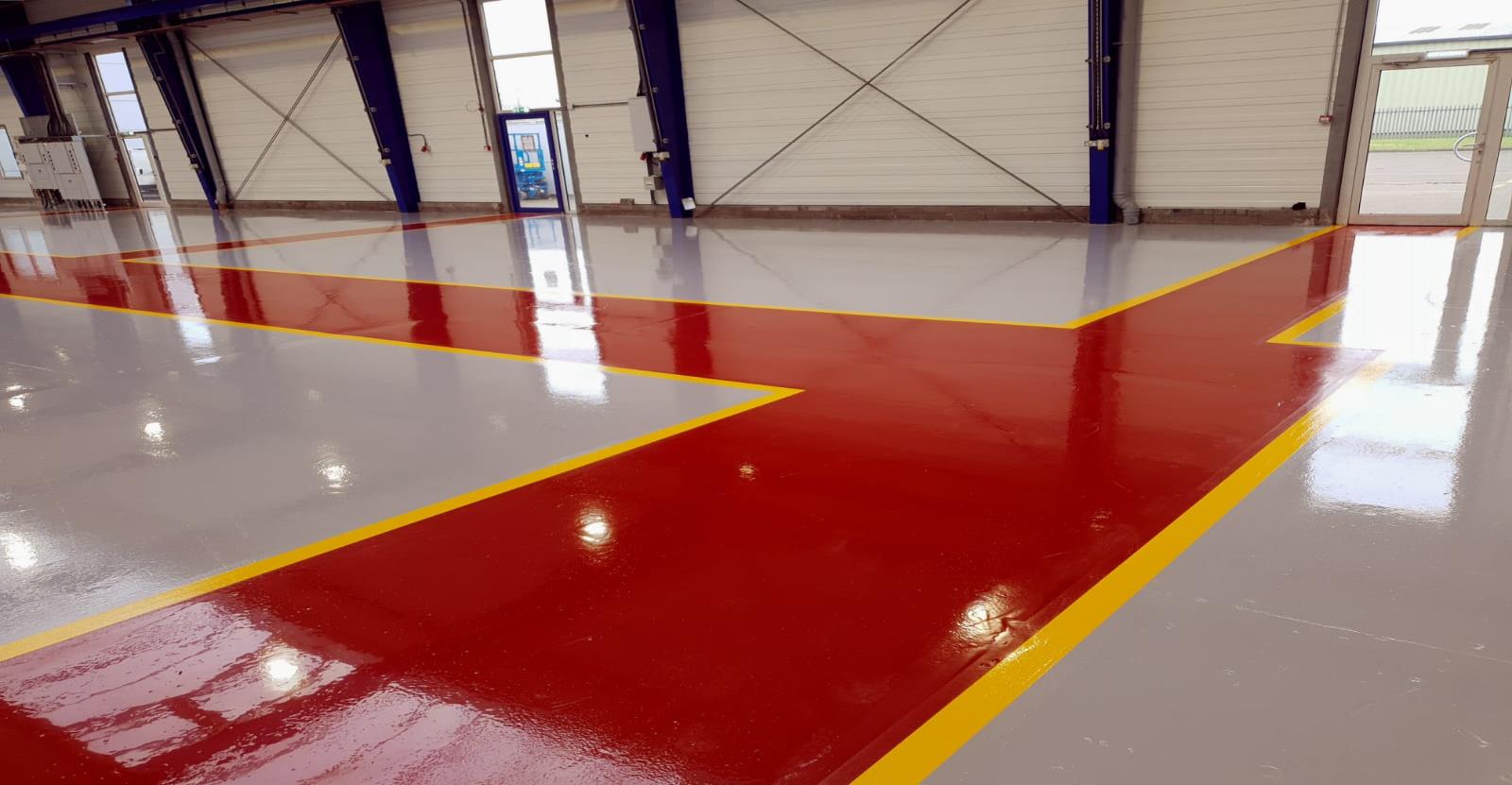
R11 – High Slip Resistance
R11 is recommended for environments where floors are regularly exposed to water, light oils, or cleaning fluids — particularly where those contaminants may not be immediately cleared. Food production areas, breweries, commercial laundries, and vehicle workshops often require R11 as a minimum.
Achieving R11 typically involves incorporating an aggregate — such as fine quartz or aluminium oxide — into the surface layer of a resin floor. This creates a textured finish that significantly improves grip without making the floor difficult to clean, provided the right cleaning regime is followed. At Optimum Flooring Services, we regularly specify R11 systems for food and beverage clients where both hygiene and safety are non-negotiable.
R12 – Very High Slip Resistance
R12 is required in environments where floors are frequently or continuously wet, oily, or contaminated — and where the consequences of a slip could be severe. Abattoirs, fish processing facilities, industrial kitchens with high-volume throughput, and areas around industrial machinery are typical R12 environments.
At this level, the surface texture becomes noticeably more pronounced. The coarser aggregate used to achieve R12 provides exceptional grip even in heavily contaminated conditions, though it does require more careful cleaning to prevent material build-up in the surface texture over time. For clients with drainage systems integrated into the floor, R12 resin flooring and proper channel drainage work hand in hand to keep surfaces as safe as possible.
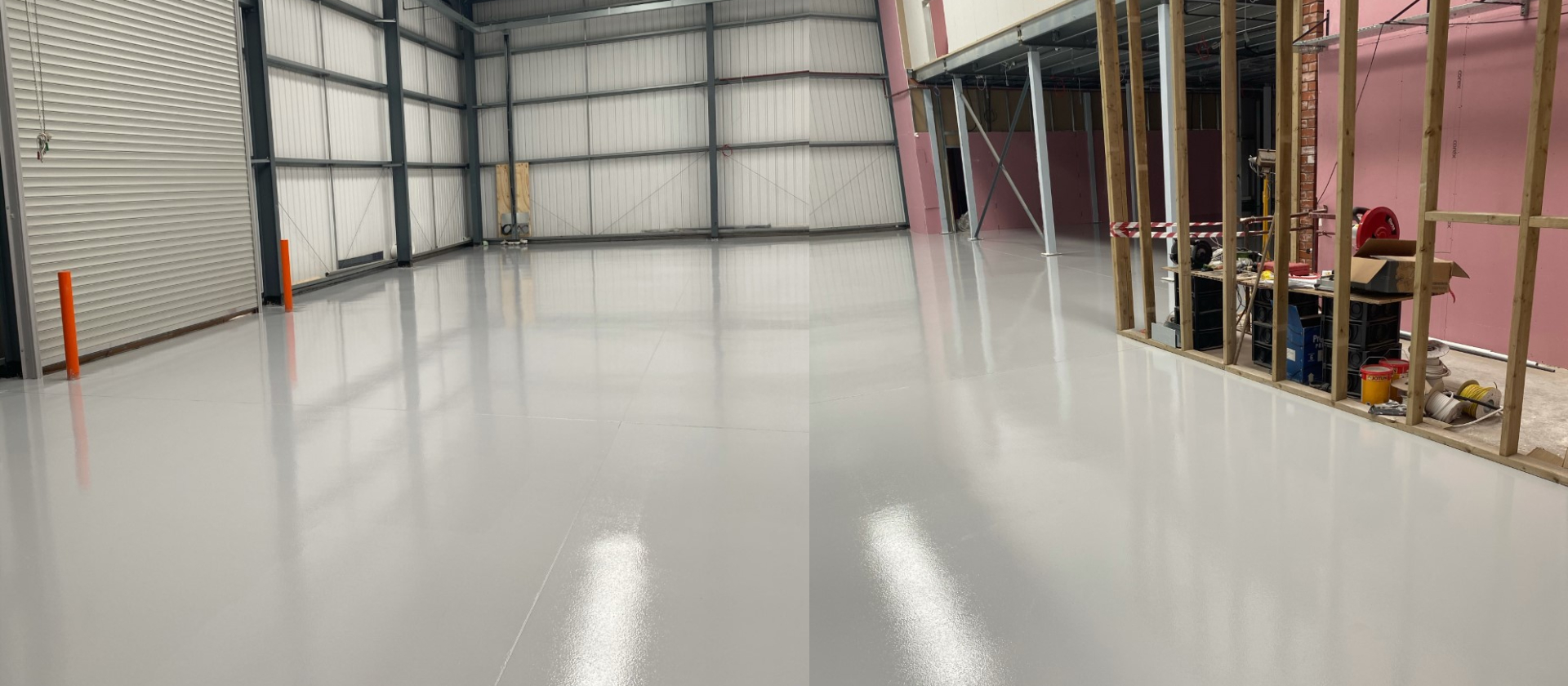
R13 – Extreme Slip Resistance
R13 represents the highest classification in the DIN 51130 scale and is reserved for the most hazardous environments imaginable — slaughterhouses, certain chemical processing plants, and areas where floors are constantly contaminated with oils, fats, or other highly lubricating substances. The surface texture at R13 is very coarse, and cleaning becomes a more demanding process as a result.
R13 is rarely specified in standard commercial or industrial builds. If a contractor or supplier is suggesting R13 for your site, it is worth asking why — in many cases, a well-designed R12 floor with appropriate drainage and housekeeping procedures will meet the same practical safety requirement with a surface that is easier to maintain.
Which R Rating Does Your Site Need?
Choosing the right R rating is not purely a matter of preference — it is a health and safety obligation. Under the Health and Safety at Work Act 1974 and the Workplace (Health, Safety and Welfare) Regulations 1992, employers have a duty to ensure floors are suitable for their intended use and do not expose employees to risk of injury. Selecting a flooring system with an inadequate slip resistance rating for the environment it will be used in can constitute a breach of those regulations.
As a general guide, the appropriate R rating by environment tends to follow this pattern:
R9 — Dry offices, showrooms, reception areas, retail spaces with no liquid risk.
R10 — Commercial kitchens with drainage, public toilets, canteens, light industrial areas.
R11 — Breweries, food production, laundries, vehicle workshops, wet processing areas.
R12 — Fish and meat processing, heavy industrial kitchens, areas with constant oil or grease exposure.
R13 — Slaughterhouses, extreme chemical or fat-contaminated industrial environments.
These are guidelines, not rigid rules. The actual risk assessment for your site should take into account the type of contaminants present, the frequency of exposure, the footwear typically worn, drainage provision, and cleaning regimes. A thorough site survey by an experienced flooring contractor is always the most reliable way to confirm the specification you need.

How Resin Flooring Achieves Anti-Slip Performance
Modern resin flooring systems — including epoxy, polyurethane, and polyaspartic coatings — are highly versatile when it comes to anti-slip specification. The most common method is the incorporation of a broadcast aggregate into the topcoat or sealer layer during installation. The type, size, and density of aggregate used directly determines the final R rating achieved.
Alternatively, for environments where both aesthetics and safety matter — such as front-of-house food and beverage venues or visitor-facing industrial spaces — a decorative quartz broadcast can achieve R10 or R11 performance while producing an attractive, coloured finish. This is a common specification for brewery taprooms and restaurant kitchens where the floor is visible to customers as well as staff.
It is also worth understanding that an anti-slip rating is only as reliable as the maintenance regime behind it. Even the highest-rated floor will become dangerously slippery if grease, bio-films, or detergent residue are allowed to build up. At Optimum Flooring Services, we always advise clients on appropriate cleaning procedures and products as part of our aftercare guidance, because a correctly maintained floor stays compliant for the long term.
How Optimum Flooring Services Can Help
At Optimum Flooring Services Ltd, we have extensive experience specifying and installing resin flooring systems across the full R rating range. Whether you are fitting out a new brewery, refurbishing an industrial kitchen, or upgrading a warehouse floor to meet current HSE guidance, our team will assess your environment, explain the options available, and recommend a flooring system that meets both your safety requirements and your budget.
We supply and install epoxy flooring, polyurethane systems, and polyaspartic coatings — all of which can be specified to achieve the correct R rating for your environment. We can also integrate drainage systems and undertake surface preparation to ensure your new floor performs exactly as intended from day one.
If you are unsure which anti-slip rating your site requires, or you would like a survey and quotation, contact our team today. We are happy to advise with no obligation, and we work with clients across the UK from our base in Newcastle-under-Lyme.




